Bates: The Avant-Garde Display Typeface for Bold Creators
There’s a moment in every creative project when you realize a standard font just won’t cut it. Maybe you’re designing a logo for a boutique perfume brand, a poster for an underground art show, or social media graphics for a high-end skincare line. The message needs to feel exclusive, artistic, and impossible to ignore. That’s where a typeface like Bates enters the picture—not as a background player, but as the star of the show.
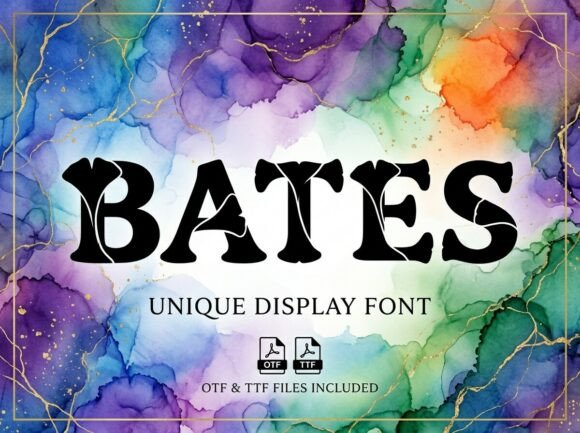
Bates is an avant-garde decorative display font designed to command attention. It’s not meant for body text or long paragraphs. Instead, it’s engineered to be the focal point—think of it as the typographic equivalent of a statement necklace or a signature piece of furniture in an otherwise minimalist room. Each letter is crafted with intricate flourishes and a strong artistic personality, yet it maintains a polished, high-end finish. This balance between bold creativity and refined elegance makes it versatile enough for luxury packaging, experimental editorial layouts, and everything in between.
Where Bold Typography Meets Real-World Application
As a designer or creative entrepreneur, you know that typography isn’t just about choosing something that looks “cool.” It’s about visual communication—setting a mood, conveying a brand’s values, and ensuring your audience feels something specific when they see your work. Bates excels in scenarios where you need to make an immediate visual impact. Its all-caps design means every letter is treated as a standalone work of art, which can be incredibly powerful when used intentionally.
Consider using Bates for:
- Logo design and brand identity systems where the logotype needs to feel unique and memorable.
- Packaging design for products that position themselves as artisanal, luxurious, or avant-garde—think cosmetics, specialty foods, or limited-edition releases.
- Poster and social media graphics that need to stop the scroll. A single word set in Bates can serve as the visual anchor for an entire campaign.
- Editorial layouts for magazines, lookbooks, or digital publications where pull quotes or feature titles should feel like art pieces themselves.
- Event invitations or announcements for gallery openings, product launches, or boutique weddings that aim for a sophisticated, artistic vibe.
What’s particularly useful is how Bates can elevate even simple marketing assets. A sales announcement, a new blog post header, or a product badge gains an instant sense of intention and craftsmanship when set in a typeface like this. It signals to your audience that you’ve paid attention to the details—that you’re not just putting content out there, but curating an experience.
Practical Considerations for Pairing and Readability
Because Bates is a display font with a strong personality, it’s not meant to do all the heavy lifting in a design. One of the most practical pieces of advice when working with a font like this is to think about contrast and hierarchy. Pair it with a clean, neutral sans-serif or a simple serif font for body text. This allows Bates to shine as the headline or accent element without overwhelming the viewer or sacrificing readability.
For example, if you’re designing a website, you might use Bates for the hero headline and then switch to a font like Montserrat or Lora for the supporting paragraphs. In a logo, you could pair the Bates wordmark with a simple tagline in a lighter weight sans-serif. This approach creates visual interest while maintaining clarity—something your audience will appreciate, whether they’re browsing on a phone or reading a printed brochure.
It’s also worth noting that because Bates is an all-caps typeface, spacing and sizing become extra important. All-caps text can feel dense if set too tightly, so consider increasing letter-spacing slightly for better legibility, especially at smaller sizes. And always test your designs at multiple scales—what looks striking on a large poster might need adjustment for a mobile screen.
Understanding the Files and Licensing
When you invest in a premium font like Bates, you’re not just getting a single file. The package includes both OTF and TTF formats, which ensures compatibility across professional design software and various operating systems. The OTF version is particularly valuable if you use Adobe Creative Cloud or other advanced layout tools, as it supports OpenType features for more refined typographic control.
Before using Bates in any commercial project—whether it’s a client logo, a product you sell, or marketing materials for your business—it’s always smart to double-check the licensing terms. Most font licenses for display typefaces like this are designed for creative use, but they can vary. Make sure you understand whether the license covers web embedding, print production, or merchandise if that’s part of your plan. This small step can save you headaches down the line and ensures you’re using the font ethically and legally.
Making It Your Own: A Final Thought on Creative Typography
Typography is one of those subtle yet powerful tools in a designer’s toolkit. The right typeface can quietly shape how people perceive a brand, an event, or a piece of art. Bates isn’t for every project—and that’s exactly the point. It’s for the moments when you want to make a statement, when you want your design to feel curated and intentional, when you need that extra layer of artistic expression.
If you’re working on a project that calls for a touch of the dramatic, the luxurious, or the unconventional, consider giving Bates a try. Experiment with it in a mockup. Pair it with a few different supporting fonts. See how it feels in context. Sometimes, the right typography choice is the one that makes you pause and think, “Yes—that’s the feeling I was going for.”
In a world saturated with generic designs, having a typeface that carries its own distinct voice can be a game-changer. It’s not just about standing out; it’s about communicating with clarity and artistry. And for creators who refuse to blend in, that’s exactly what Bates offers.