Eyrie: A Display Typeface That Commands Attention
Some fonts whisper. Others hum quietly in the background, doing their job without fuss. Eyrie does neither. This is a typeface that walks into the room and immediately owns it. If you’ve been searching for a font that feels less like a utility and more like a statement piece, Eyrie might be exactly what your next project needs.
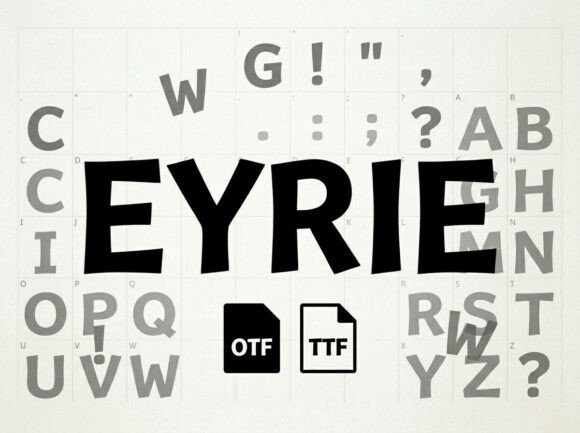
Designed as a decorative display typeface, Eyrie carries a strong visual personality built on unique artistic elements. Every uppercase letter feels intentionally crafted, almost sculptural. There’s weight, drama, and a sense of confidence baked into each character. This isn’t a font you reach for when you need to set a 500-word blog post. It’s the font you choose when you need a headline that stops someone mid-scroll, a logo that feels unmistakably yours, or packaging that practically jumps off the shelf.
Where Eyrie Fits Into Real Design Work
Let’s talk practical applications, because that’s where a font either proves its worth or collects digital dust. Eyrie shines brightest in situations where typography needs to carry significant visual weight. Think bold headlines on posters, hero text on landing pages, or the masthead of an editorial layout. It’s the kind of typeface that turns a simple event invitation into something people actually want to keep.
For small business owners working on brand identity, Eyrie offers something genuinely useful: instant differentiation. If your competitors are all using clean sans serif fonts or predictable script typefaces, showing up with a display font like this signals that your brand has personality. It works particularly well for creative businesses, boutique brands, artisan products, entertainment companies, and anyone whose visual identity benefits from a bit of theatrical flair.
Here’s where Eyrie tends to perform exceptionally well:
- Logo design – The all-caps structure gives logos a strong, unified look without feeling generic.
- Packaging design – Especially for premium products, craft goods, or anything targeting a design-conscious audience.
- Social media graphics – Bold enough to read at small sizes on a phone screen, distinctive enough to build recognition over time.
- Poster and flyer design – Eyrie handles large-scale display text with authority.
- Website hero sections – A single line set in Eyrie can set the entire tone for a homepage.
- Merchandise and apparel – The artistic quality of each letter translates well to printed products.
- Book covers and editorial layouts – Particularly for genres or publications that lean into bold, expressive design.
- Digital product branding – Course titles, ebook covers, podcast artwork, and similar assets benefit from its distinctive character.
Understanding the All-Caps Design Choice
One thing worth addressing directly: Eyrie is an uppercase-only typeface. There are no lowercase letters here, and that’s a deliberate design decision rather than an oversight. All-caps display fonts serve a specific purpose. They create a sense of uniformity and strength across every word you set. When every letter shares the same height and visual rhythm, headlines feel more cohesive and commanding.
This does mean Eyrie isn’t the right fit for body text or any situation where you need extended readability at length. That’s perfectly fine. Most professional design projects use multiple typefaces anyway. You’d pair Eyrie with a clean sans serif or a readable serif font for paragraphs and supporting text, reserving Eyrie for the moments where you need maximum visual impact. This kind of font pairing is standard practice in editorial design, web design, and branding work.
The key is matching the font to the job. Eyrie handles high-impact, short-form typography beautifully. Long-form reading? That’s a job for a different typeface entirely.
Making It Work Across Different Projects
Versatility in a display font doesn’t mean it works everywhere. It means it works well across a meaningful range of contexts. Eyrie pulls this off because its artistic elements feel intentional rather than gimmicky. The visual personality is strong, but it doesn’t overwhelm the content it’s presenting.
For marketing professionals creating campaign assets, Eyrie can unify a visual system across different formats. Use it for email subject line graphics, banner ads, social media headers, and printed brochures, and you’ll build a recognizable visual thread without relying on a logo alone. That kind of typographic consistency strengthens brand recognition in ways that stock imagery simply cannot.
Content creators and bloggers can use Eyrie for featured images, Pinterest graphics, or chapter headings in digital guides. It adds a layer of polish that signals professionalism, even for solo creators working from a home office. The difference between a Canva template that looks like everyone else’s and a design that feels distinctly yours often comes down to font choice.
For crafters and hobbyists, Eyrie works beautifully on custom invitations, greeting cards, scrapbook elements, and DIY print projects. If you sell handmade goods at markets or through an online shop, a distinctive font on your labels and tags can elevate the perceived value of your products significantly.
Choosing Fonts That Actually Serve Your Goals
Before adding any new typeface to your toolkit, it helps to think about what you actually need it to accomplish. A few honest questions can save you from accumulating fonts you never use:
- What kind of projects do I work on most often?
- Do I need a font for headlines, body text, or both?
- What feeling or tone am I trying to communicate?
- How will this font pair with the typefaces I already own?
- Will I use this for commercial projects, and does the license cover that?
Eyrie answers several of these questions clearly. It’s a premium font built for headline and display use. Its tone is bold, artistic, and expressive. It pairs well with simpler typefaces that stay out of the way. And the included OTF and TTF files provide broad compatibility across design software and platforms, which matters when you’re working across Adobe applications, web builders, and print workflows.
The OTF file is particularly useful if you work in professional layout software and want access to advanced typographic features. The TTF file ensures everything renders correctly across standard applications and devices. Having both formats included means fewer compatibility headaches down the road.
A Few Practical Tips for Getting the Most Out of Display Fonts
Display typefaces like Eyrie reward thoughtful use. Here are some observations from working with bold, decorative fonts in real projects:
Give it space. Letters with strong visual personalities need room to breathe. Generous tracking and ample white space around Eyrie headlines will let the artistic details register properly. Crowding a display font into a tight layout undermines its impact.
Test at actual size. A font that looks striking in a 200-point preview might feel completely different at the size you’ll actually use it. Set your headline text, step back, and evaluate it at the scale your audience will experience it.
Check the license for your use case. If you’re creating merchandise, client work, or products for sale, make sure the font license covers commercial use. This is one of those details that’s easy to overlook until it becomes a problem.
Don’t force it into every project. A font like Eyrie has a specific character. It will be perfect for some projects and completely wrong for others. That selectivity is actually what makes it effective. When you reserve it for the right moments, it carries more weight.
Pair it intentionally. Combine Eyrie with a neutral sans serif or a classic serif font for supporting text. The contrast between a bold display typeface and a quiet body font creates visual hierarchy naturally, guiding readers through your content without confusion.
Finding the right typeface for a project sometimes feels like searching for something you can’t quite describe until you see it. Eyrie fills a specific niche in the creative font landscape: bold, artistic, unapologetically expressive, and built for moments where typography needs to do more than just communicate words. Whether you’re building a brand from scratch, refreshing a visual identity, or adding a standout asset to your design toolkit, it’s the kind of typeface that earns its place through actual use rather than just looking good in a specimen sheet.