Gutsy: The Display Typeface for Designs That Demand a Second Look
Sometimes, a design calls for a font that doesn't just sit quietly on the page—it demands the spotlight. You know the feeling: you're working on a project that needs personality, a bold statement that cuts through the visual noise. That's where a typeface like Gutsy enters the picture. It's not your everyday text font for paragraphs of body copy. Instead, it's a decorative display typeface crafted specifically for moments when you want every letter to make an impression. Think of it as the typographic equivalent of a show-stopping accessory—perfect for high-impact headlines, artistic logos, and creative packaging where visual weight and unique character are non-negotiable.
When Ordinary Typography Won't Cut It
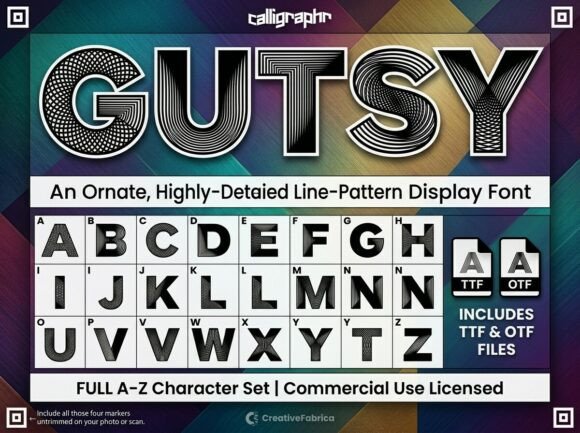
Every designer, entrepreneur, or content creator hits a point where standard fonts feel too safe. Your brand identity needs to feel distinct. Your social media graphics need to stop the scroll. Your packaging needs to whisper (or shout) quality and creativity from the shelf. This is the domain of a strong display font. Gutsy, with its all-caps design and unique artistic elements, is built for this purpose. It's important to note upfront that this is an uppercase-only typeface—a deliberate design choice that amplifies its bold, commanding presence. There are no lowercase letters, which means it's engineered for headlines, logos, monograms, and decorative initials where every glyph is treated as a piece of art.
This characteristic makes it exceptionally clear about its role. You wouldn't use it for a blog post's body text, but you'd absolutely use it for the blog's header, a chapter title in an ebook, or a bold pull quote. The strong visual personality ensures that anything set in Gutsy carries an inherent sense of energy and confidence, making it a valuable asset in your toolkit of design assets for projects that aim to be memorable.
Practical Applications: Where Bold Typography Meets Real Projects
Understanding a font's personality is one thing; knowing exactly how to deploy it is what brings value. Let's explore the practical scenarios where a typeface like Gutsy can solve design problems and elevate outcomes.
- Brand Identity & Logo Design: For startups, artisan brands, or personal brands aiming for a modern, edgy, or artistic vibe, Gutsy can form the core of a logo. Its all-caps, decorative nature ensures the mark is distinctive and scalable. Paired with a simpler sans-serif for body text, it creates a dynamic and professional typographic hierarchy.
- Packaging Design: On a crowded shelf, packaging has seconds to communicate. Using Gutsy for product names or key descriptors on labels, boxes, or bags can create instant visual appeal and help with brand recognition. It works particularly well for products in the food, beverage, cosmetic, or lifestyle spaces where craft and personality are selling points.
- Marketing & Social Media: In the fast-paced feed of Instagram or Pinterest, a bold headline font is crucial. Gutsy is ideal for creating eye-catching social media graphics, promotional banners, or video thumbnails. Its high-impact style ensures your message is readable even at a glance, improving engagement for announcements, sales, or quote graphics.
- Editorial & Digital Products: Think beyond digital. This font shines in editorial design for magazine covers, chapter openers, or poster layouts. For digital products like online course graphics, PDF guides, or webinar slides, it adds a polished, professional finish that enhances perceived value.
- Physical Collateral & Merchandise: From event posters and business cards to merchandise like t-shirts, mugs, or tote bags, Gutsy's unique letterforms translate beautifully to print. Its strength lies in making a statement, which is exactly what you want on promotional materials.
Making It Work: Pairing, Readability, and Professional Polish
A powerful font is a tool, and like any tool, its effectiveness depends on how you use it. Here’s some practical advice for integrating a display typeface like this into your work without common pitfalls.
Font Pairing is Everything. The golden rule with a strong display font is balance. Since Gutsy is all-caps and highly decorative, it needs a counterpart. Pair it with a clean, neutral sans-serif font for body text or secondary information. This contrast allows the display font to command attention without overwhelming the reader. A classic, readable serif can also work for a more sophisticated pairing. Always test your pairings in context—mock up a headline and body text to see how they interact visually and ensure overall readability.
Readability Considerations. Because it's a display face, context is key. Use it for short bursts of text: headlines, subheads, logos, and initials. Avoid setting long sentences or paragraphs entirely in Gutsy, as the artistic details that make it special can hinder reading flow in large blocks. Its all-caps nature also means spacing (tracking) might need slight adjustment to feel comfortable, especially at larger sizes.
Review the Included Files. You'll receive both OTF and TTF files, covering professional design software and universal compatibility. This ensures whether you're working in Adobe Illustrator, Photoshop, Canva, or even Word for certain projects, you have the right file format. The OTF is typically preferred for its advanced typographic features in professional layouts.
Licensing for Commercial Use. Before using the font for client work, merchandise for sale, or any commercial project, always verify the license. Understanding what's permitted—whether it's for a single end product, unlimited projects, or includes webfont licensing—is a professional necessity. This avoids headaches down the line and ensures your business or freelance practice operates above board.
The Final Word: A Tool for Intentional Design
Choosing a font like Gutsy is a deliberate decision. It's for the moments when you need to inject confidence, artistry, and unmistakable personality into a project. It won't be the right fit for every task, but for the right task—whether it's crafting a brand's visual identity, designing packaging that pops, or creating marketing assets that convert—it can be the element that ties the entire creative vision together. In a world saturated with generic visuals, having a bold, well-crafted typeface in your arsenal is what allows you to create work that doesn't just communicate, but resonates.